
See Key Documents That Shaped America At The Henry Ford Museum
A traveling exhibition from the national archives will be available to view in Metro Detroit this year.
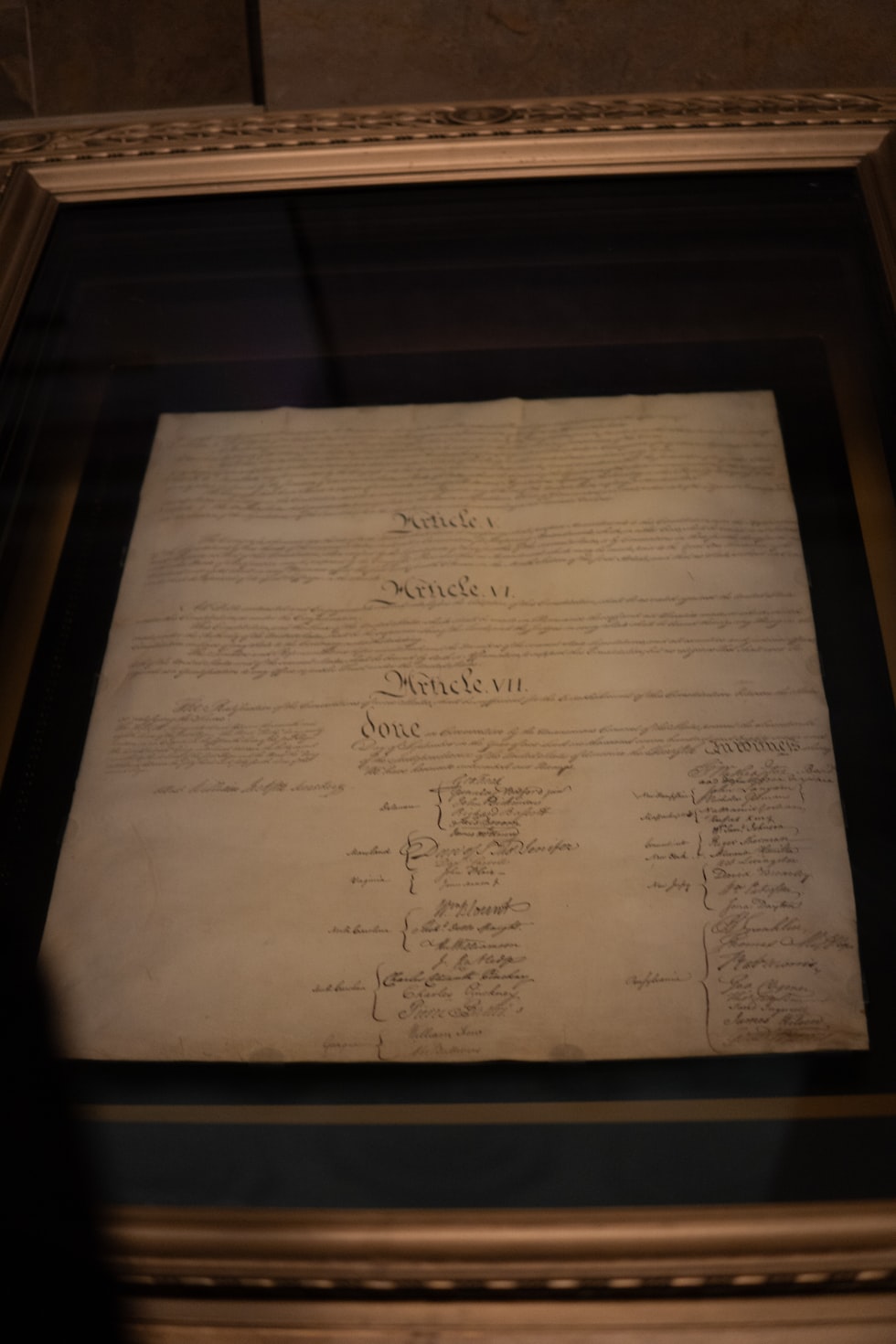
The Freedom Plane National Tour is headed to the Henry Ford Museum of American Innovation from July 9 through July 26, and with it will be seven historical documents that were part of our nation's founding and will be on display for free.

Reservations are currently open by clicking this link here for you to see one-of-a-kind historical documents.
Below are the documents you will be able to see on display and their importance in our nation's history:
Original Engraving of the Declaration of Independence, 1823:
One of only about 50 known engraved copies of the Declaration of Independence, printed from a copperplate of the original, commissioned by John Quincy Adams and made by engraver William J. Stone, the engraving captured the size, text, lettering, and signatures of the original document (on loan from David M. Rubenstein).
Should Michigan Counties Drop Names Linked To Slavery?
Articles of Association, 1774:
Signed by all 53 delegates, the Articles of Association urged colonists to boycott British goods and was the Continental Congress's first major unified act of resistance against Britain.
George Washington's, Alexander Hamilton's, and Aaron Burr's Oaths of Allegiance, 1778:
Oaths of Allegiance that all officers of the Continental Army signed during the Revolutionary War.
Treaty of Paris, 1783:
Signed by John Adams, Benjamin Franklin, and John Jay, this Treaty with Great Britain formally recognized the United States as an independent nation.
Secret Printing of the Constitution in Draft Form, 1787:
A rare copy of the U.S. Constitution in draft form, with the delegates' handwritten notes made during the Constitutional Convention in 1787.
Tally of Votes Approving the Constitution, 1787:
The voting records of the Constitutional Convention reflecting the debates, resolutions, and eventual vote on the final text that would become the Constitution.
Senate Markup of the Bill of Rights, 1789:
After the Constitution was ratified by the states and became the supreme law of the land, Representative James Madison proposed a series of amendments. Several states advocated for additional protections for individual liberties. This is the U.S. Senate's "markup" of what became the Bill of Rights.
Visit To The National Holocaust Museum In Washington D.C.
Gallery Credit: Photos Courtesy of Robb Francis
More From 107.7 WRKR-FM